OVERVIEW
Aiming to rethink what seating looks like by designing a new way to sit comfortably anywhere.
YEAR
DURATION
ADVISORS
TOOLS USED
2021
3 months
Willy Schwenzfeier
SolidWorks • Keyshot • Rapid Prototyping

WHAT IS A SEAT?
This project began with an exercise to sketch out 25 seats from memory and 25 from observation. The aim being to examine what a seat really is.
HOW DO WE SIT?
We then asked ourselves, “What is a seat for?” The answer: to sit. From this came careful observation of all of the different ways humans sit. From this I noticed how when left without a seat, humans often search for back support by leaning on walls or propping themselves up with an arm or two.
HUMANS OFTEN SIT LEANING AGAINST SOMETHING BECAUSE WE CAN SIT MORE COMFORTABLY WITH BACK SUPPORT
OBSERVING ALL OF THE DIFFERENT WAYS THAT HUMANS SIT WITHOUT A SEAT.


To design a way to make sitting without a seat more comfortable.
DESIGN OPPORTUNITY

FREESTANDING BACK SUPPORT
From observation it became clear that it is uncomfortable for people to sit without any back support. Thus the idea came to design a free-standing support that would allow users to comfortably sit wherever they like.
USERS WOULD BE ABLE TO USE THE FREESTANDING SUPPORT IN MANY DIFFERENT MODES OF SITTING AND REST.
THIS DESIGN TACKLES MAINLY THE ISSUE OF NO BACK SUPPORT WHEN SITTING WITHOUT A TRADITIONAL CHAIR.


TESTING, REFINING, AND TESTING SOME MORE
The most rigorous part of the process was determining at what angle and dimension would the seat provide the most back support to a range of different users. Over 8 different prototypes were tested on varying users to determine a form that was universally comfortable.


ALL CONNECTIONS DESIGNED TO MAKE DISSASSEMBLY AND REPLACEMENT EASY AND INTUITIVE.
DESIGNING FOR END OF LIFE
Chosen prospective materials emphasized durability and easy maintanence to extend the product’s life. There was also heavy focus on designing for easy and intuitive disassembly. Individual components can be replaced rather than the whole product thrown away further extending the product’s life while reducing unnecessary waste.


MATERIAL RESEARCH AND LIFE CYCLE ANALYSIS
In order to be conscious of the environmental and social impacts of this product throughout its life cycle, I created a process tree examining the materials chosen. This gives a broad picture of the impacts that this product might have which can inform better decisions.

Does a seat have to be a chair?
When studying the different ways that people sit, the question of "What does a seat have to look like?" came to mind. Focusing on providing key points of support, this 'seat' strays from typical ideas of what a chair should look like.


COMPACT, SUPPORTIVE, ON-THE-GO SEATING
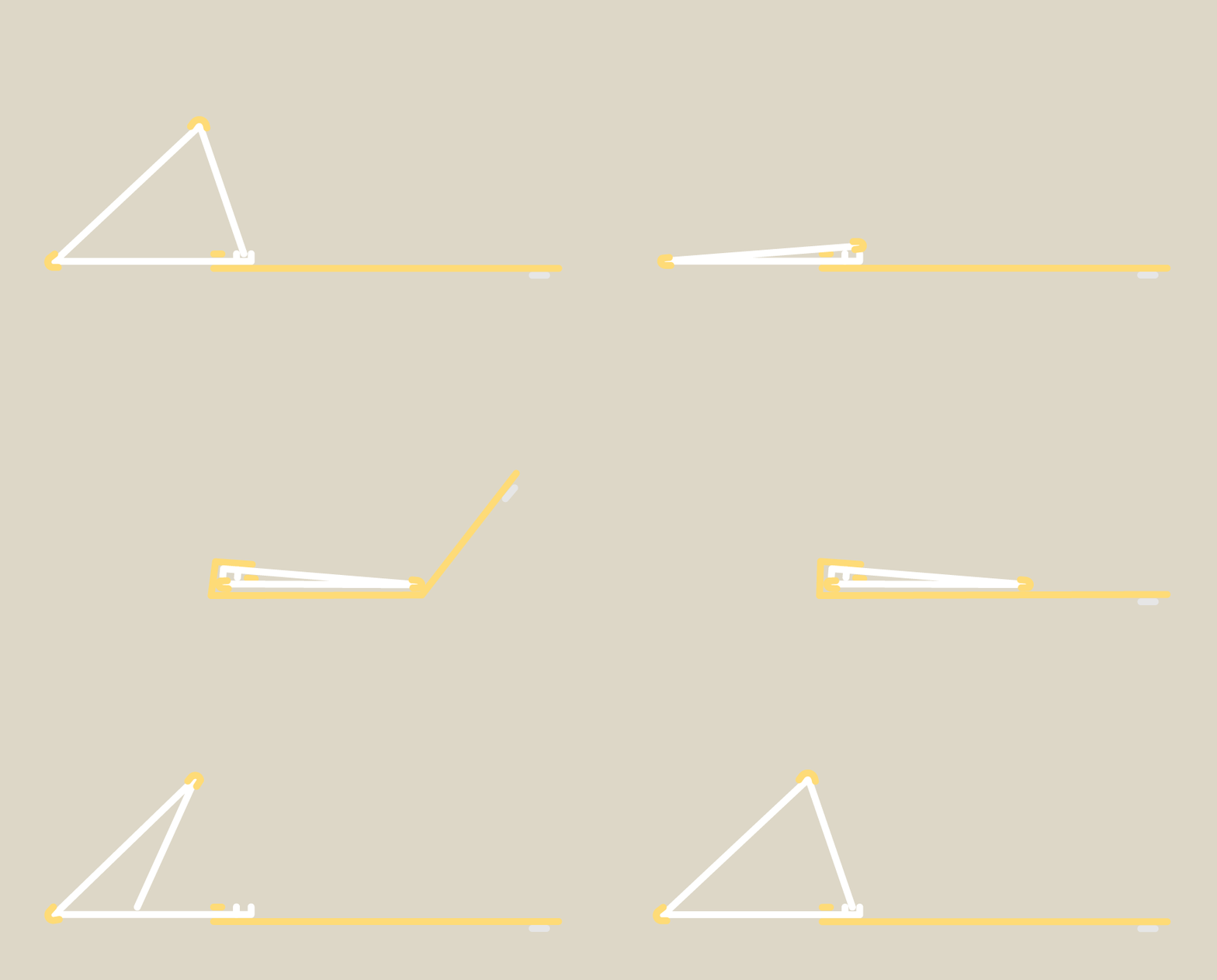
This seat is designed to be extremely compact to maximize portability. The seat stores flat and opens up into an adjustable triangular back support with an attached waterproof floormat. Folding up into the size of a laptop the seat can easily fit into a backpack and be taken to and used in just about any setting.

SEAT CAN BE USED IN DIFFERENT ORIENTATIONS FOR UPRIGHT OR LAID BACK ANGLES AND STORES FLAT